
You're Studying Radiography Wrong (Here's Why)
Not all studying leads to learning. In this post, you’ll learn how to identify ineffective study methods, understand why they fail, and apply proven strategies that actually work for mastering radiography concepts and improving exam performance.
Jeremy Enfinger
3/22/20269 min read
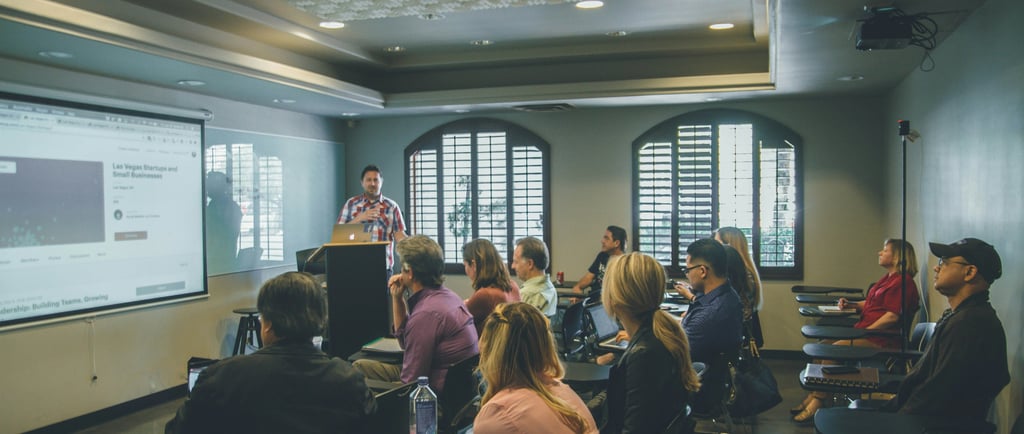

I’ve been teaching for over 20 years now and the pattern is clear. Students just aren’t being taught how to properly study in school any longer. There are current academic studies that acknowledge this and are attempting research to understand why, but that's an entirely different type of article.
So what's a student to do if they didn't learn how to properly study prior to starting their radiography program? It’s certainly not a course you can take in the radiography program, but the expectation exists regardless. Hopefully this article will help!
When I start a lab session with my students, I might ask, "What did you learn about in the lecture today?" Or if I'm the one doing the lecture, I'll almost always ask, "Who read the chapter assigned for today's lecture?" Or I might keep it simple and ask something like, "What did you read about before class?"
These aren't questions I ask necessarily to see who's putting in the work or not. I ask this to determine the level of depth I'm going to need to go into during the lesson in order to (hopefully) bring the students up to speed with the concepts being reviewed at that particular time.
Over the last several years, I've noticed some declining trends where anywhere between 10% and 20% actually respond to confirm they have read the assigned reading material before I go over it in class. So what can I take away from this as the instructor? Well, I can make some assumptions, which are dangerous by themselves, but are useful when it comes to considering the possibilities:
Possibility #1: The other 80% to 90% actually did read the material, but are so shy or introverted that they neglect to confirm they've read it when I ask.
Possibility #2: The other 80% - 90% read the material but weren't paying attention when I asked the question (at the beginning of class).
Possibility #3: The other 80% - 90% didn't read the material. They didn't prepare for lecture. They continue with the lack of preparation throughout the entire course despite being asked who read the material before every lesson, despite me setting this expectation when reviewing the syllabus on day one.
As I said, it's dangerous to make assumptions, so I attempt to gather data to support these possibilities. I might simply ask who can summarize the main concepts in the chapter. I might cover a topic in lecture and pause to ask some questions, gauging the students' understanding of the material. I might look at quiz scores, noting the questions missed commonly. In my experience, Possibility #3 has been prominent in the last few years.
What most students don't understand is instructors have a much greater ability to broaden understanding of a topic if students come prepared with basic knowledge about said topic. We understand every student is coming with their own level of preparedness, but if the majority students are being introduced to a concept for the first time during lecture, the instructor has to consider how deeply they may be able to cover the topic within the allotted time in class.
Instructors understand the learning process, which must take place in a particular order:
Acquiring basic knowledge of a topic, which includes learning definitions of new terms, gaining an introduction to new ideas, and exposure to theories and concepts.
Developing a deeper understanding of a concept. This means knowing processes combining simple topics to see how they work together for a specific function, understanding cycles combining multiple topics, and the ability to compare and contrast different (but potentially related) topics.
Being able to analyze and apply basic knowledge and understanding to various scenarios, predicting outcomes that may differ based on variables, and making real-time decisions in clinical environments to ensure the best outcomes for patients.
Application of knowledge and understanding can never precede acquiring basic information. For a radiography program that’s competency based, you need to come prepared. A lot of students have admitted to me they don’t read the textbook at all (let alone before class), they don’t look at slides I've posted in the modules before class, and they only take notes when I’m lecturing. They expect (the instructor) to go over everything needed within the confines of the lecture. If this applies to you, you’re setting yourself up for failure!
How you can avoid it is by coming to lecture or lab with a basic knowledge of the material. Most of the courses in a radiography program involve abstract concepts that alone are difficult to relay. We tell students that for every hour of lecture, you should prepare to study at least 3-4 hours outside of class. Knowing this, it’s unrealistic to expect a teacher to relay all of the information you need in a way that gives you a deep understanding within a single hour of lecture. It’s also unrealistic to place the expectation on yourself to be able to develop that deep understanding from that same hour of lecture.
But, if you (and the class) come prepared with basic knowledge of the material, whether that comes with a deep understanding or not, the instructor can more effectively use that lecture time to develop a deeper understanding and challenge you to apply concepts in a way that shows true mastery of the material.
I'm not writing this as a crotchety aging teacher who has a challenge with generation gaps. On the contrary, I care very much about student success and I worry that entry-level radiography students aren't entering their prospective programs with the same set of tools.
Even if you don't want to take my word for it, let's approach the topic from the perspective of the ARRT's expectations. For that, we can reverse-engineer some things. Read the next paragraph with intention.
The ARRT Registry Exam is not a simple memory test. Very few questions will relate to simple definitions of terms, specific positioning angles or central ray markers, or just labeling anatomy. It will test you on your understanding and ability to apply concepts to very real situations that relate to the outcome of the quality of your x-rays, keeping radiation dose low (for you, other healthcare workers, and patients), the ability to recognize insufficiencies in your work and the need for repeat images, how to repeat successfully, how your equipment works, and your ability to promote patient safety given a variety of things that could potentially go wrong. The Registry Exam will have questions relating to and overlapping various different classes and topics. It's a test to determine whether you can use critical thinking in order to apply what you've learned in real-world scenarios.
So then, how do you succeed?
First and foremost, strive to come to class with basic knowledge by preparing ahead of time. Use active recall methods instead of passive reading when you're preparing for class. Start with these options:
Skim the chapter, taking notes on major themes
Read the chapter thoroughly, writing down definitions of important terms
Summarize each section in your own words
Create an outline of the chapter
Review the presentation slides
Summarize specific concepts in your own words
Make notes from lecture slides before your scheduled lecture
Come to class with a list of questions (ask if the lecture itself doesn't answer them)
Answer the end-of-chapter questions, noting any you can't
Create a list of your own questions as if you were going to write the test (stick to 3-5 questions on each major topic - pro tip: keep an answer key on a separate page and use these questions to quiz yourself prior to any scheduled exam)
If you wait until you’ve heard the lecture to consider reading the material or even use any of these methods to study, chances are you’re going to be completely lost during class and playing catch-up. Aim to switch your studying of the material to before your lecture instead of after, or cramming right before a test. Trust me, once you get even one or two weeks behind, it’s difficult to catch up because the program moves fast, so bring your A-game!
During lecture, try to pay close attention (meaning focus on the instructor’s explanations). Avoid writing down every word the instructor says, which is only supporting learning from a memorization perspective... You can almost always record a lecture if you want to have it transcribed later if you need to revisit a concept. By preparing ahead of time, lecture will be an opportunity to focus on the concept that's being explained so that you have a full understanding once the lecture is complete. Write additional questions you might have about the material during lecture, based on what the instructor is saying, to broaden your understanding of the concept, whether you ask those questions in class or try to answer them yourself in your study time.
After lecture, briefly review your notes, the textbook and the lecture slides again. Avoid simple memorization. Focus on the concepts themselves, and think about how to apply those concepts as a technologist. Take opportunities to quiz yourself regularly with spaced repetition. This just means you can test your knowledge of the concepts at various intervals to improve long-term retention. For example, quiz yourself the day of the lecture once you've returned home. Then quiz yourself three days later, then one week later, and then two weeks later on any given topic.
Writing things down by hand has been proven over and over in academics to improve long-term retention, so take advantage of that by writing your own questions from the material and make your own study guides.
So many students ask instructors for study guides and they're missing a huge opportunity to improve their own retention. Plus, it can be perceived as a red flag by instructors who are repeatedly asked for them by the same students. A constant need for study guides to be provided can relay a lack of confidence in a student's level of understanding. It can also be perceived as a way to do the bare minimum to just get by similar to saying, "Just tell me what I need to know to pass" which is not an attitude that will ever promote development of a full understanding of the material.
Be honest with yourself and regularly assess your weak points. Develop a plan to improve your understanding of those areas with active recall techniques when you're studying.
Approach your studies with the understanding that concepts within the radiography program build upon themselves, and will all eventually relate to other concepts you will learn in the program. Never hesitate to review previous material from the program. This will help with studying for midterms and finals, but treat your studies as cumulative, meaning you should expect to retain information from each class throughout the entirety of the program. You'll be responsible for remembering it all on your ARRT Registry Exam.
Remember the levels of content mastery. I mentioned them before, but I'll give you an example here with a specific topic in mind:
Acquire basic knowledge. Example: You read in your textbook that mAs controls radiation quantity and kVp controls beam quality (you remember this but may not fully understand what that means yet)
Acquire a deeper understanding: Example: You realize both mAs and kVp can be increased to add exposure to the image receptor, but you also understand each of these primary technical factors have very different purposes when manipulated, causing the x-ray beam to interact with tissue very differently, and resulting in unique changes to the finished radiograph.
Application of concepts... You are provided with a scenario with multiple variables and you are able to critically think to provide the best outcome. Example: You understand that, to an extent, you can increase the kVp by 15% and halve your mAs to acquire a more uniformly penetrating beam with less radiation exposure to the patient while the image processing algorithm adjusts the scale of contrast to be acceptable. You visualize through thicker anatomy with higher kVp and you maintain consistent exposure to the image receptor with an accompanying reduction in mAs.
What happens if you get to the end of the program, barely passing your classes, and you haven’t fully grasped these concepts? It's not easy to hear, but you won’t be prepared when the ARRT Registry Exam asks you questions worded differently, or with different variables than you’re used to from your practice exams.
I speak with students across the country all the time who have failed their exams and need to remediate. In every case of a failed ARRT exam, it’s because they did not fully understand some fundamental concepts, so they couldn’t answer questions when asked to apply them to scenarios that they hadn’t considered yet.
For this reason, I’ve been working on publishing a self-paced online course on remediation for the ARRT Registry Exam to specifically help people who have one or more failed attempts, or for those who know they've had poor preparation for their initial one. The approach to remediation has many added considerations when compared to what this article goes into. Steps that include identifying and prioritizing weak areas for remediation, and efficient methods to do so. If you’re reading this and need to remediate, sign up for my email list to get up to date info about it, and get added to the waiting list.
But if you’re in your program now and haven’t yet developed a true understanding of some of the concepts, it’s not too late. I highly encourage you to start using some of these strategies today. There's time to change your habits, start coming to class prepared, use effective study techniques after class, and you’ll thank me later!
Connect With Me
Empowering students through tailored tutoring in radiologic technology.
© 2026. All rights reserved.
Have a question?